


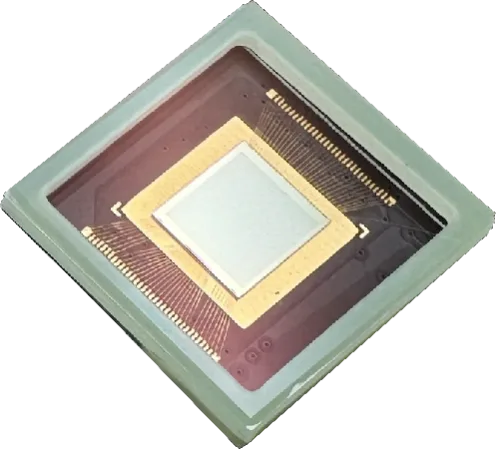
SHENZHEN, CHINA – June 16, 2025 – AlpsenTek, today announced the launch of its event-based vision sensor, the ALPIX-Maloja(APX002). Leveraging its innovative IN-PULSE DiADC architecture, ALPIX-Maloja delivers the inherent advantages of event cameras – low power consumption, less latency, reduced computation demand and enhanced privacy protection – while establishing a new benchmark for cost-effectiveness in its class. This sensor is designed as a crucial component for next-generation edge AI visual systems, targeting applications in smart home appliances, AON perception, intelligent devices, and intelligent nursing solutions.
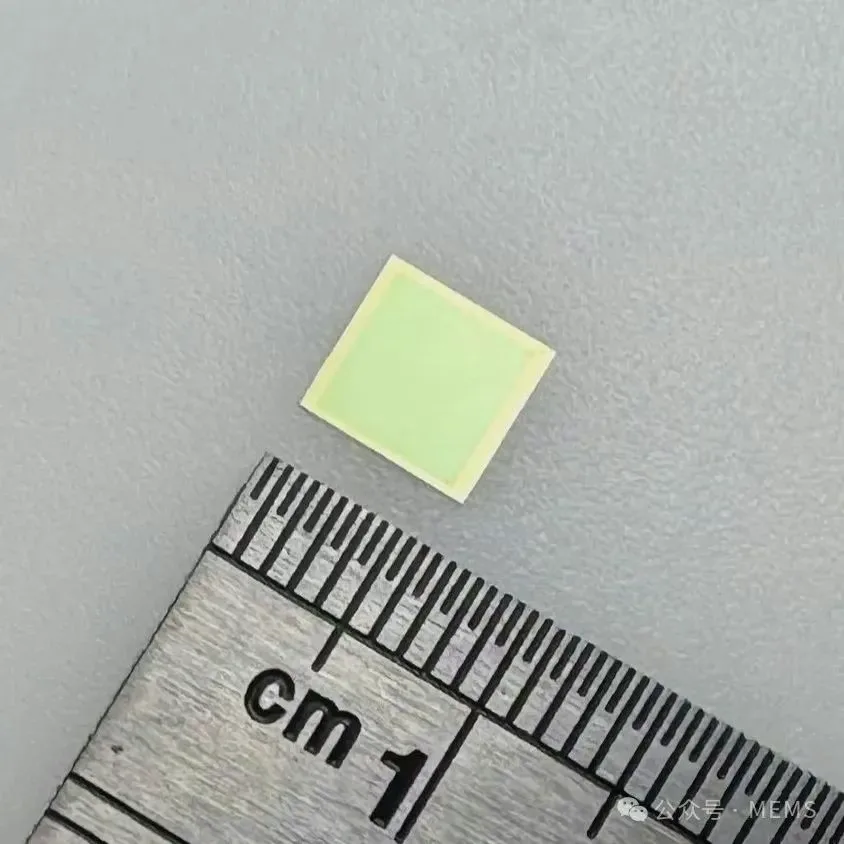
The ALPIX-Maloja is designed for addressing the existing and emerging requirements of modern AI devices. Building upon a decade of innovation and research in event-based vision and neuromorphic sensing by its core team, and leveraging the company’s proven track record in delivering multiple hybrid vision sensors, ALPIX-Maloja boasts eye-catching specifications: high frame rate (1000 fps), wide dynamic range (120dB), and remarkably low power consumption (4mW @ 1000 FPS). With a resolution of 256 × 256, a pixel size of 20 μm × 20 μm, and a 1/4” optical format, it meets the stringent demands of size, power, and compute-constrained edge systems operating in challenging lighting conditions, while also offering cost advantages to enable diverse product configurations.
Advantages of ALPIX-Maloja:
1. Features of Event-Based Vision:
a) Low power: 4 mW @ 1000fps enables true AON edge applications.
b) Features integrated on-chip change detection.
c) High sensitivity & low Latency: maintains high sensitivity for motion and human detection even in low-light conditions.
d) Keep robust in complex Lighting: delivers high-speed motion feature even in challenging light environments.
e) Privacy protection: outputs only sparse event data (typically contours and trajectories generated by moving objects), excluding detailed imagery.
f) Low data redundancy & low computation load: generates only 10-20% of the data volume of equivalent frame-based sensors. Compatible with standard low-power SoCs (e.g., ESP32S3) and NPU-equipped MCUs (e.g., STM32N6, RV1106), reducing system computing costs.
2. Innovative IN-PULSE DiADC Architecture for high performance, low power and cost-efficiency.
Utilizing the IN-PULSE DiADC architecture, ALPIX-Maloja integrates sensing, storage, and basic computation within each pixel unit. This enables independent light intensity change detection, local analog-to-digital conversion, and signal processing directly at the pixel level.
“Our IN-PULSE DiADC architecture allows each pixel to output processed change information directly,” explained Dr. Roger BOSTOCK, Senior Technical Director of AlpsenTek Zurich. “This results in a more compact structure for miniaturization and low power. Crucially, it shortens signal paths, reduces external noise impact, enhances stability, and minimizes bus data traffic and power consumption – essential for embedded devices. Furthermore, the larger pixel size provides greater light sensitivity, maintains high Quantum Efficiency (QE) for improved signal-to-noise ratio, reduces pixel crosstalk from parasitic light effects, lowers readout noise and dark current, and lessens reliance on complex noise reduction algorithms, simplifying design and increasing flexibility.”
“The concept for ALPIX-Maloja, originated from our Zurich team with early patent groundwork, marking a new branch in our event-sensing exploration,” emphasized Liming CHEN, Co-founder and EVP of R&D at AlpsenTek. “Through effort by our European and Chinese teams, coupled with continuous collaboration with diverse clients, AlpsenTek is confident in delivering a highly competitive vision sensor. It meets with the industry shift from passive ‘seeing’ to active ‘sensing’ in machine vision, and we anticipate its impact in gesture recognition, touchless control, presence detection, pose estimation, and beyond – solidifying its role as the base for low-power edge AI vision systems.”
Typical Applications:
ALPIX-Maloja integrates with traditional edge perception, detection, and feature recognition algorithms. It also supports AlpsenTek’s event data processing modules for enhanced performance.
- Consumer Electronics: gesture recognition and pose detection for intuitive human-machine interaction.
- Smart Care: fall detection cameras, pose estimation cameras, sensory training cameras for homes, care facilities, and special education institutions, offering low-intrusion, privacy-centric solutions.
- Smart Home Appliances: presence detection, touchless appliance control, and gesture recognition for responsive, low-power, privacy-protected solution, for TVs, fans, air conditioners, fridges.
- Smart Hardware (Pet Cams, Feeders, Litter Boxes, Bird Monitors, Wildlife Feeders, Robot Vacuums): provides low-power, high-sensitivity, lightweight presence and motion detection, for pet cams, litter boxes, bird monitors, wildlife feeders and so on.
5. Smart Retail & Transportation: light-weight, non-intrusive, privacy-protected people counting.
6. AON Perception: enables low-power, continuously edge monitoring systems.
Sampling & Availability:
For inquiries or sample requests, please contact your AlpsenTek account manager or email: business@alpsentek.com