
(SHENZHEN, November 6, 2026) Motorola yesterday officially launched its ultra-premium flagship smartphone, the Motorola signature 27. The flagship features a breakthrough imaging innovation: the EVS Action Sensor, dedicated to motion sensing. Powering this advance is AlpsenTek’s independently developed Hybrid Vision Sensing (HVS) technology and end-to-end solution.
4 Years of R&D Overcoming Traditional Imaging Bottlenecks
Capturing motion—especially in low-light environments—remains a longstanding challenge in mobile imaging. Over four years of dedicated effort, AlpsenTek collaborated closely with Motorola, Qualcomm, and supply chain partners to successfully bring HVS technology to high-volume commercial production.
Unlike conventional sensors that only record complete static or sequential frames, AlpsenTek’s HVS technology integrates traditional image sensing with event-based vision sensing on a single chip. While capturing scene details, it simultaneously perceives spatial-temporal movement and scene changes at ultra-high temporal resolution. This provides real-time motion data to the imaging system, enabling the camera to strike an optimal balance between exposure brightness and motion clarity.
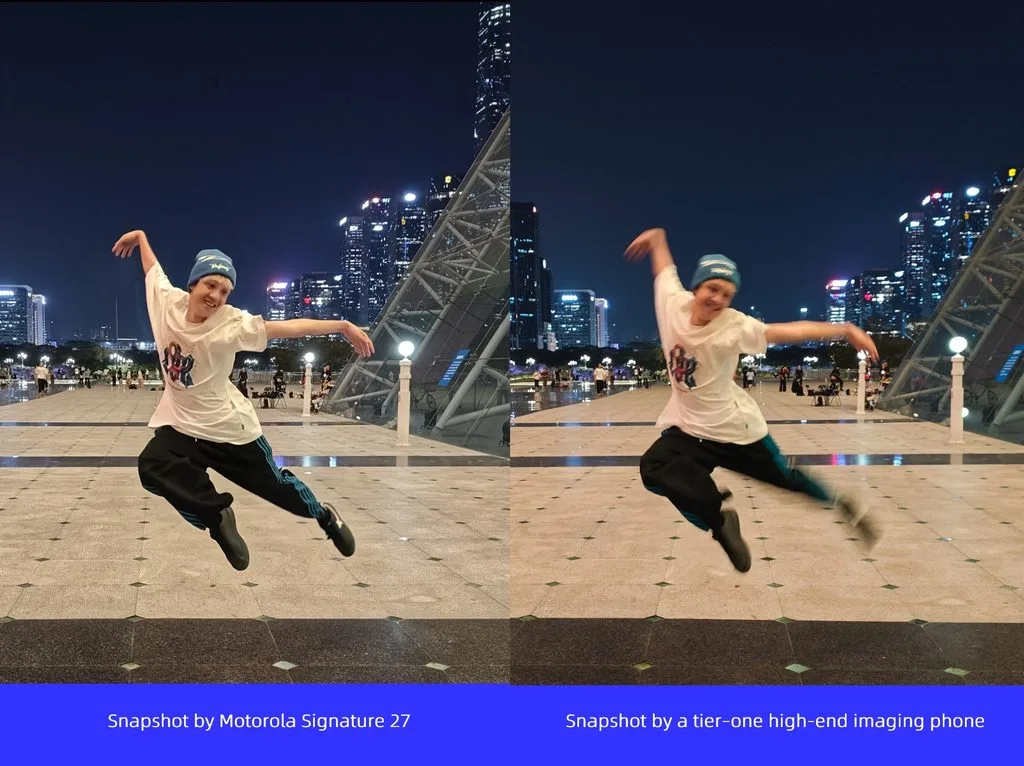
Building the Foundation for Next-Generation Vision Sensing
Marking a major milestone for event-based vision technology entering the consumer electronics market, this mass production achieved breakthroughs across sensor design, power optimization, algorithmic adaptation, and hardware-software co-design.
AlpsenTek remains committed to pioneering foundational vision sensing technology. Beyond mobile photography, HVS’s capability to detect dynamic change serves as a real-time, highly efficient spatial-temporal sensing base for smart vehicles, robotics, embodied AI, and next-generation intelligent devices.
Looking ahead, AlpsenTek will continue partnering with global leaders to strengthen HVS as the Foundation for Spatiotemporal Vision—empowering machines not only to see the world, but to understand how it changes.